Denver Bicycle Accident Lawyer Tips for Speaking With Police After an Accident

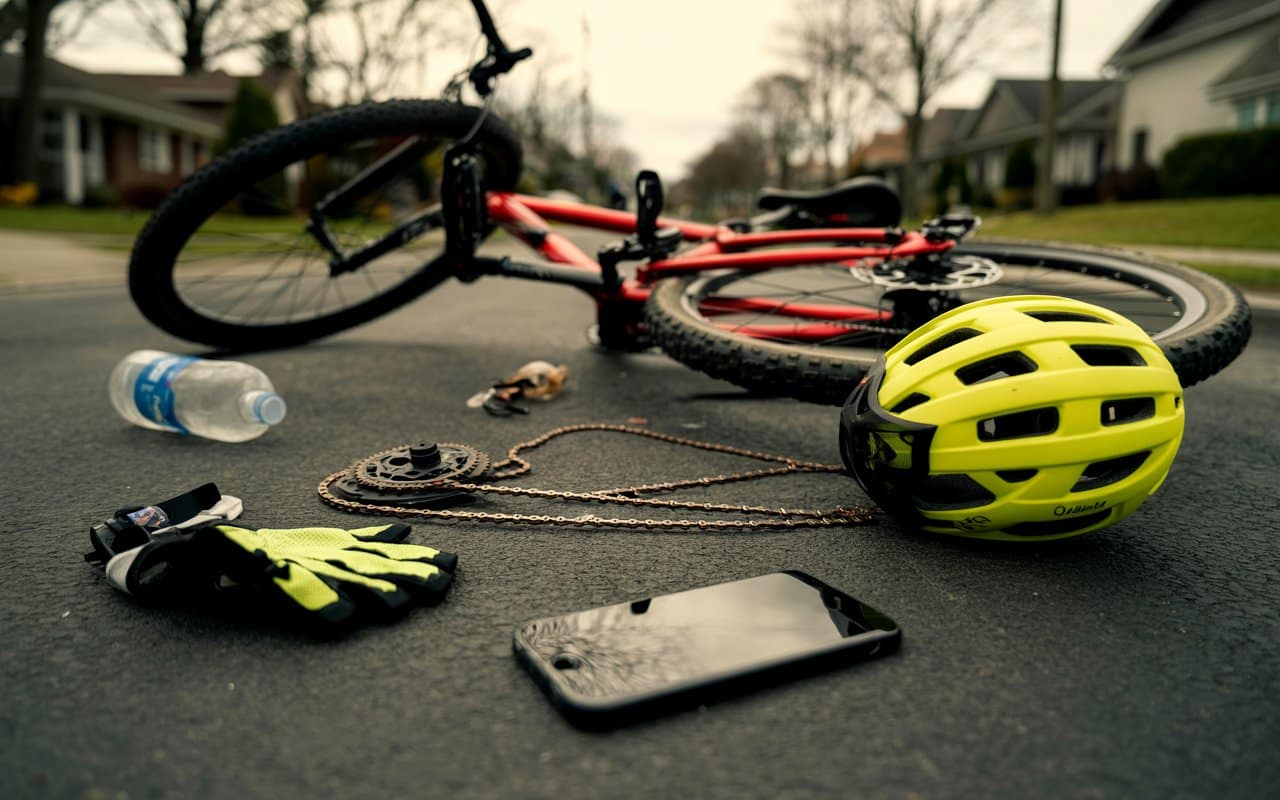

A bicycle crash scrambles your senses fast. One second you are watching traffic, road debris, or a turning vehicle. The next, you are on the pavement, trying to figure out what hurts, whether your bike is rideable, and why a police officer is asking questions while adrenaline is still flooding your system.
What you say in those first minutes matters. It matters for your medical care, for the crash report, for insurance, and sometimes for a later injury claim. It also matters because many injured cyclists are courteous, self-blaming, and in a hurry to minimize what happened. That instinct can cost you.
If you ride in Denver, you already know bicycle collisions happen in complicated places. They happen in bike lanes blocked by delivery vans, at intersections where drivers turn across a rider’s path, on roads with patchy pavement, and in corridors where traffic moves faster than it should. The legal and practical details vary from case to case, but one principle is consistent: be truthful, be careful, and do not guess.
The first job is safety, not storytelling
After a crash, your body may not give you reliable information right away. Riders often say they feel “mostly okay” and then learn later they have a concussion, a wrist fracture, a torn shoulder, or a back injury that tightened up over the next several hours. That is why your first priority is getting out of immediate danger and getting assessed, not explaining every detail perfectly on the spot.
If you can move safely, get to a protected area away from moving traffic. If you cannot move without pain, stay put and wait for medical help. When police arrive, start with the essentials. Tell them if you are hurt, dizzy, disoriented, or having trouble breathing. If your helmet struck the ground, say so. If you hit your head, even lightly, say so. Those details matter both medically and factually.
A common mistake is trying to be agreeable before you understand what happened. People say things like, “I’m fine,” “It was probably my fault too,” or “I didn’t see the car either.” Those statements often come from shock, not careful judgment. Once they make it into a report, they can take on a life of their own.
Why police questions can feel harder than they sound
Most officers are trying to gather basic facts. They were not there when the impact happened. They arrive after the scene has shifted, cars have moved, witnesses are talking over each other, and one or both people involved are stressed. The questions can seem simple, but your answers can shape the first written version of the event.
An officer may ask, “What happened?” That sounds broad and harmless. In practice, it invites riders to speculate. They fill in blanks, estimate speeds they could not really judge, or assume what the driver “must have been doing.” The better approach is narrower. Stick to what you directly observed.
For example, “I was riding east in the bike lane on Colfax. The car was beside me and then turned right across my path. I braked and hit the passenger side.” That is stronger than, “I think he didn’t see me,” because it describes conduct instead of guessing at intent.
That distinction matters. Reports are often read later by insurance adjusters, attorneys, and sometimes jurors. Concrete observations carry more weight than theories.
Give facts, not guesses
One of the best habits after a bicycle accident is to separate what you know from what you assume. If you are unsure about a fact, say that you are unsure.
An accurate statement might sound like this: “I did not get a clear look at the light before impact,” or “I am not certain how fast the vehicle was going,” or “I remember the driver turning, then I was on the ground.” Those answers are honest and hard to challenge later.
By contrast, rough guesses can backfire. If you estimate that a car was going 40 miles per hour, and later camera footage suggests it was closer to 25, the problem is not just the number. The problem is that your reliability may be questioned on everything else too.
The same rule applies to your own condition. If you are not sure whether you lost consciousness, say you are not sure. If you remember a gap in time, mention that. Gaps in memory are common after head impacts, and pretending otherwise does not help.
The phrases that do the most damage
A surprising number of injury claims get harder because of a few reflexive statements made at the scene. Cyclists often pride themselves on being responsible road users. That can translate into language that sounds generous but becomes legally expensive.
These are the kinds of statements to avoid unless you are absolutely certain they are true:
- “I’m okay.”
- “It was my fault.”
- “I didn’t have lights,” if you are not sure whether the lights were on or visible at impact.
- “I never saw the car,” when what you really mean is you saw it too late to avoid the crash.
- “I don’t want to make a big deal out of this.”
Each of those statements can be taken out of the context of shock, pain, or confusion. Better wording is simple and measured. “I need medical evaluation.” “I am not ready to discuss fault.” “I want the report to reflect what I observed.”
How to answer the officer’s core questions
Police typically want the who, what, where, and when. That is reasonable. Your task is to answer those points without drifting into speculation or self-criticism.
Start with your position and direction of travel. Mention the lane, bike lane, shoulder, crosswalk, trail crossing, or intersection. Then describe the vehicle’s movement as you saw it. Did it pass and turn right? Did it pull out from a driveway? Did it open a door into your path? Did it back up? Those movement details matter far more than broad statements like “they came out of nowhere.”
Then identify any immediate conditions worth documenting. Maybe a parked van blocked sight lines. Maybe there was gravel in the bike lane, faded striping, a missing bollard, or low evening sun. Maybe a driver was stopped and then accelerated abruptly. These are facts about the scene, not excuses.
If an officer asks whether you were wearing a helmet, answer truthfully. If asked about lights, reflectors, or lane position, answer truthfully there as well. Honesty is always the safest long-term strategy. The key is to keep your answer confined to what you know and avoid volunteering extra guesses that are not necessary.
If you are in pain, say it clearly
Officers are not doctors, but what they record about your condition can matter later. If you feel pain, dizziness, nausea, numbness, confusion, blurred vision, ringing in the ears, or trouble moving a limb, say so. Be specific. “My left wrist hurts badly when I try to rotate it” is more useful than “My arm kind of hurts.” “I hit my head and feel foggy” is more useful than “I’m shaken up.”
This is especially important with head injuries. Many cyclists can stand, talk, and even joke after a concussion. That does not mean they are medically fine or giving reliable statements. If you feel mentally off, tell both police and paramedics.
Years later, people often remember the impact but not the exact words used afterward. The report may become the best contemporaneous record. If it says you denied injury and refused treatment, an insurer may lean on that hard, even if you ended up in urgent care that night with significant symptoms.
Ask for correction if the officer misunderstood you
You do not need to argue at the scene, but you do have the right to correct obvious factual mistakes. If the officer repeats back something inaccurate, speak up calmly. If you were riding in the bike lane and the officer says you were “in traffic,” correct that. If the driver turned left and the report language suggests a right turn, correct that too.
The tone matters. You are not trying to win a debate on the roadside. You are trying to make sure basic facts are recorded accurately. A calm sentence often works best: “Officer, I want to clarify one point. I was in the bike lane traveling straight, not merging into the vehicle lane.”
If you are too hurt or overwhelmed to process what is being written, do not force yourself. Get medical help first. Reports can sometimes be supplemented or corrected later, though doing it later is harder than doing it right away.
Witnesses can disappear in minutes
Independent witnesses often make the difference in disputed bicycle cases. Drivers and riders may sincerely remember a crash differently, especially at intersections. A neutral bystander who saw the turn, the light, or the lane position can break the tie.
Police may collect witness names, but do not assume they always will, or that every contact detail will make it into the final report. If you are physically able, or if someone with you can help, try to get names and phone numbers. A witness who says, “The cyclist had the lane and the car cut right in front of him,” is far more valuable than a witness who is never identified again.
Denver crashes often happen in busy areas where people move on quickly. Someone waiting for a bus or grabbing coffee may be gone before the officer finishes the first set of questions. If a person saw it, ask them politely to stay and speak with police.
Your phone can preserve details your memory won’t
If your injuries allow it, use your phone to document the scene before bikes and cars are moved too far from where they ended up. Take photographs of the bicycle, vehicle, skid marks, debris, road paint, potholes, signage, and any visible injuries. Get wide shots and close-ups. Capture the intersection from multiple angles.
This is not about creating drama. It is about preserving transient evidence. Rain washes away markings. Vehicles leave. Construction changes lane configurations. Road crews patch defects. By the time someone investigates weeks later, the scene may look different.
It also helps to note the time, weather, and any statements made spontaneously by the driver. If a driver says, “I didn’t see you,” that may matter. If they say, “The sun was in my eyes,” that may matter too. Do not interrogate anyone. Just document what is naturally said.
When the driver starts talking to you
After a crash, drivers sometimes apologize, explain, or try to negotiate informally. They may be rattled. They may urge you not to call police. They may ask you to say you are not injured. They may blame you immediately. None of that is unusual.
Keep your responses limited and professional. Exchange the necessary information. Do not argue about fault at the scene. Do not accept cash on the spot in place of a report if there is any possibility of injury. Bike crashes that look minor can become expensive quickly. A carbon fork can have hidden damage. A wheel that spins today may fail tomorrow. A wrist sprain can turn out to be a fracture.
If the driver is confrontational, step back and let police handle communication. Your goal is not to persuade the driver. Your goal is to preserve your safety and your record.
Some Denver-specific realities cyclists should keep in mind
Denver presents a mix of urban streets, neighborhood cut-through traffic, light industrial corridors, and popular riding routes where driver expectations vary a lot. That creates recurring fact patterns. Right-hook collisions, dooring incidents, driveway exits, and crashes near trail crossings all raise slightly different reporting issues.
For example, in a right-hook crash, a driver may insist they were “already turning” and imply the rider should have yielded. The cyclist’s lane position, the sequence of movements, and whether the rider was proceeding straight are crucial details. In a dooring case, the exact placement of the parked car and the rider’s path matter. In a crash involving poor road maintenance, officers may focus first on vehicle contact and miss the roadway defect unless you point it out clearly.
That is one reason many injured riders later speak with a Bicycle Accident Lawyer Denver cyclists trust. The legal issue is rarely just “who hit whom.” It is often about preserving how, where, and why the crash unfolded.
If you receive a citation, do not debate the whole case on the roadside
Sometimes an officer issues a citation before all the facts are fully developed. That does not mean the officer is hostile, and it does not mean the ticket is the final word on liability. Roadside decisions are made quickly, sometimes on incomplete information.
If you are cited, accept the paperwork without turning the scene into a courtroom. Do not make broad admissions because you feel pressured or embarrassed. A citation can be contested. A poorly worded admission can haunt you longer.
This is especially true when the rider is dazed. Officers may misread confusion as evasiveness. If you are having trouble answering because you hit your head, say that directly. “I am having trouble concentrating. I want medical evaluation before I answer more questions” is a reasonable statement.
Medical care and the police report are linked more than people realize
What you tell police should line up with what you tell medical providers, because both should reflect the truth of what happened and how you felt. If you report neck pain to the officer but forget to mention it at urgent care, that gap may later be used to question whether the symptom was real. The opposite problem happens too. Riders tell paramedics they blacked out, but the police report says “no injury reported” because the officer never heard that detail.
The answer is consistency, not scripting. Tell the truth each time, with the same level of care. Mention every area of pain, every symptom, and every uncertainty. If your symptoms worsen later, that is not suspicious, it is common. But it helps if the early record already shows that your body took a significant hit.
A short script can help when your brain is overloaded
After a crash, many people benefit from having a few plain sentences ready. Not rehearsed, just steady. If you are injured and trying to stay focused, these points help:
- “I want medical evaluation.”
- “I will describe what I observed, but I do not want to guess.”
- “I was riding straight in the bike lane when the vehicle turned across my path.”
- “I hit my head and I am having trouble remembering everything clearly.”
- “Please include the witness information in the report.”
That kind of https://gregoryhrvi703.silverstonebrief.com/posts/denver-bicycle-accident-lawyer-tips-for-preserving-crash-scene-evidence language is calm, factual, and protective of your credibility.
When to speak with a lawyer
Not every bicycle accident requires an attorney, but many do. If you have meaningful injuries, disputed fault, a serious damage claim, a hit-and-run problem, or a report that does not match what happened, legal advice can be valuable early. Timing matters because evidence fades and witness memories do too.
A seasoned Bicycle Accident Lawyer Denver riders call after a collision is not there to dramatize the event. The real value is often practical. They help obtain the report, identify video sources before footage is overwritten, preserve bike damage evidence, coordinate with insurance, and correct mistaken assumptions before they harden into the accepted version of events.
That is particularly useful when police did not witness the crash and had to piece it together from competing statements. Early clarification can make a substantial difference.
The quiet danger of being “nice”
Many cyclists are thoughtful road users. They wave drivers through, avoid escalation, and try to be fair. That mindset is admirable on the road. It can be harmful after a collision if it leads you to understate what happened.
Being honest does not mean taking blame for things you do not know. Being civil does not mean minimizing your injuries. Being reasonable does not mean agreeing with a driver’s version to keep the peace.
The most credible injured riders are often the ones who stay measured. They do not embellish. They do not accuse recklessly. They simply state the facts they observed, ask that those facts be recorded accurately, and seek proper medical care. That approach serves you far better than trying to sound forgiving in the middle of a trauma response.
What good communication looks like at the scene
A strong statement to police after a bicycle crash is usually short. It identifies your path, the vehicle’s movement, the point of contact, and your physical symptoms. It avoids legal arguments and avoids mind-reading. It also leaves room for uncertainty where uncertainty exists.
Picture a rider who says, “I was traveling north in the bike lane. The SUV passed me and then turned right across the bike lane into a driveway. I braked but hit the rear passenger side. My right shoulder, left wrist, and head hurt, and I feel dizzy. There was a woman at the bus stop who saw it.”
That is far more useful than a long emotional narrative, and far safer than a string of apologies.
The minutes after a bicycle accident are not the time to win every point. They are the time to protect your health and the factual record. If you can do those two things well, you put yourself in a much stronger position, whether the matter ends with repairs and recovery or grows into a more serious claim.